The Inventory Paradox
We treat our values like artifacts in a museum—static, polished, and ready for display. But what if the 'core' you've been excavating is just a collection of empty containers?
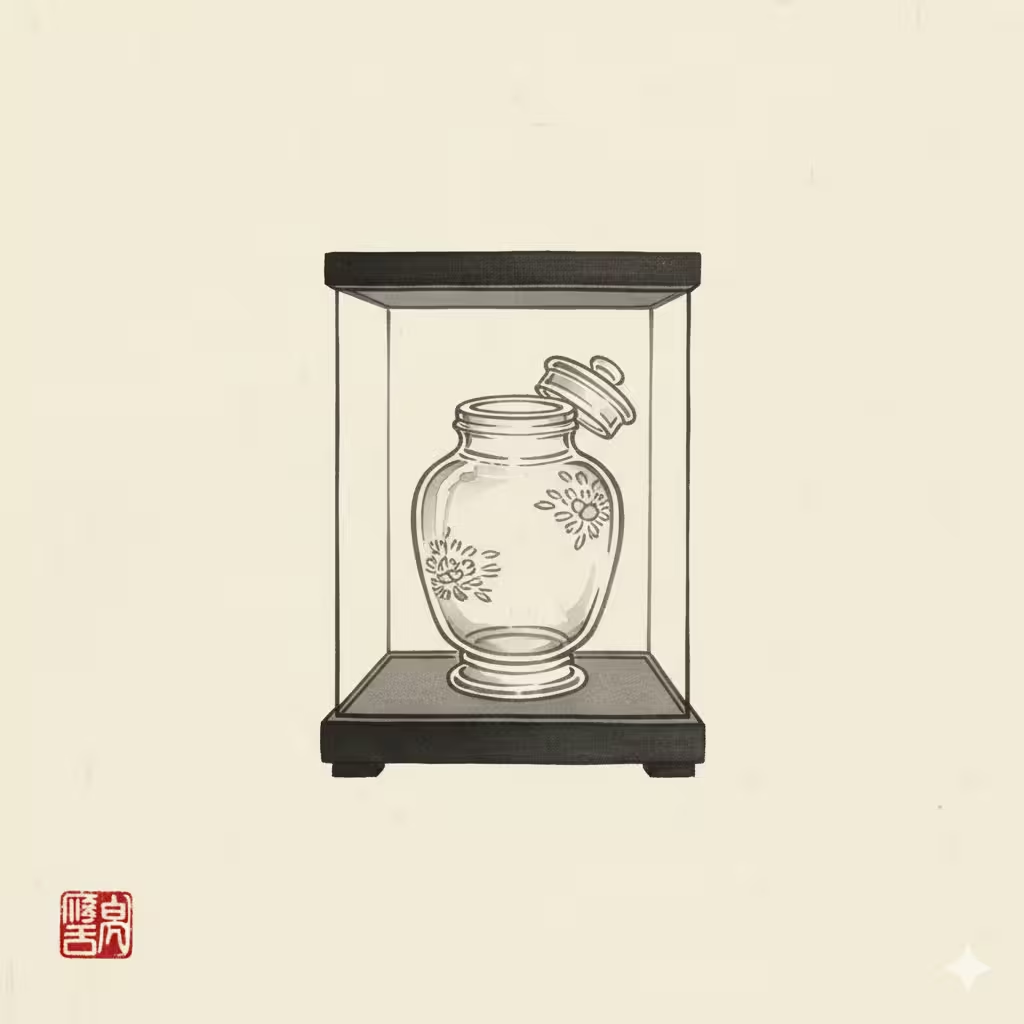
Look at this word: HONESTY.
It's a good word. It's got seven letters, it feels heavy, and you probably have it in a notebook from a corporate workshop, or in a "values clarification" exercise you did in therapy.
Where is it?
We treat values like they're artifacts in a drawer – fully formed objects waiting to be discovered like a fossil in a dig. The exercise assumes that your "self" is a museum, and you just need to excavate carefully enough to find the displays.
But a word is just a container. And sometimes, the container is empty.
Empty Container
I can say I value "Honesty." You can say you value "Honesty." We both check the same box. But that tells me zero about how you will behave when honesty is expensive. For example, when honesty will hurt someone you love. Or when it conflicts with loyalty, or kindness, or keeping your house.
In linguistics, we have the Signifier – the word "D-O-G" – and the Signified – the actual, furry, barking animal. Usually, they're connected. But in the world of values, the leash has snapped.
You may walk around holding the word "EXCELLENCE" – the actual behavior of excellence has run away. People think that by saying the word, they are doing the thing.
You can't pet the word "DOG", and you can't live the word "INTEGRITY".
A good dictionary is full of words. Does a word – no matter how "good" it is – actually have value? If you weigh the word "Honesty", it weighs nothing. It doesn't occupy space.
So if the word doesn't have value... what does?
The Choice
Economists use a concept called Revealed Preference. The idea is that we can't actually know what you value by asking you. We have to watch you. Answering usually costs nothing because it doesn't require a sacrifice. But a choice? A choice has a cost.
If you say you value "Connection", but you consistently cancel plans because you're "too tired", I'd suggest you actually value "Autonomy" or "Comfort". You aren't "failing" at your value – you are successfully living a different one that you just haven't admitted to yet.
Why label ourselves with values then?
Words protect the version of ourselves we want to be. We use our intelligence to bridge the gap between our "Stated Self" and our "Actual Self". But as we saw with the Smart Idiot Effect, being better at "literacy" just makes us better at designing our own self-deception.
The value isn't the thing you circle on the list. The value is the thing you cannot help but do.
The Verb vs. The Noun
We want our values to be nouns. Static, solid things we can "have" or "possess". But a value is more like a verb.
You don't have honesty. You act honestly.
The lists never match because the "Self" that makes the list is a performer. The "Self" that lives the life is down in the mess.
You can only be a direction. Never a destination.
The only value that matters isn't the one on paper. It's the one written in the accumulation of your choices.
Topics
More Read

A Boring Secret About Habits
The people who stick with habits aren't more disciplined than you. They've discovered that motivation is a trap, and there's a simpler path hiding in plain sight.
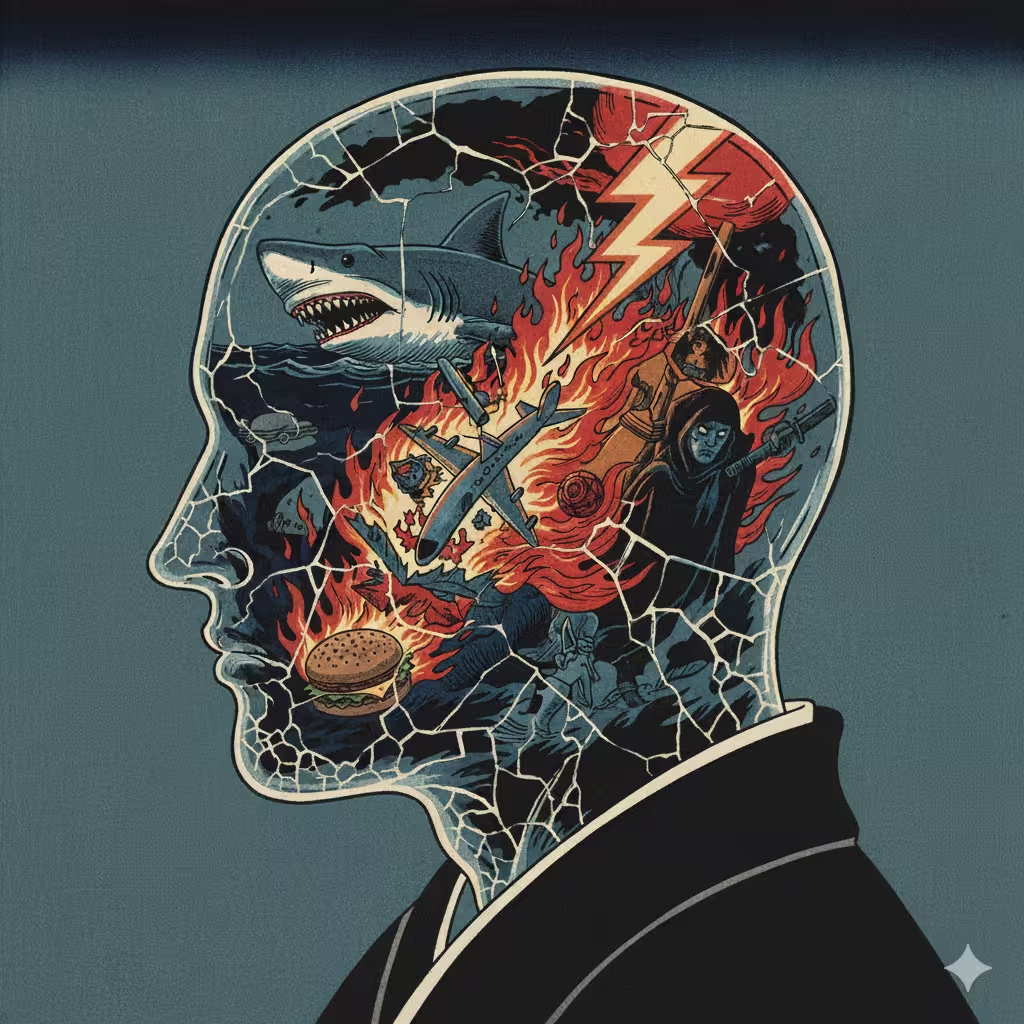
Your Brain Lies About Danger
Human brain ignores statistics and asks one question instead: "Can I remember this happening?"